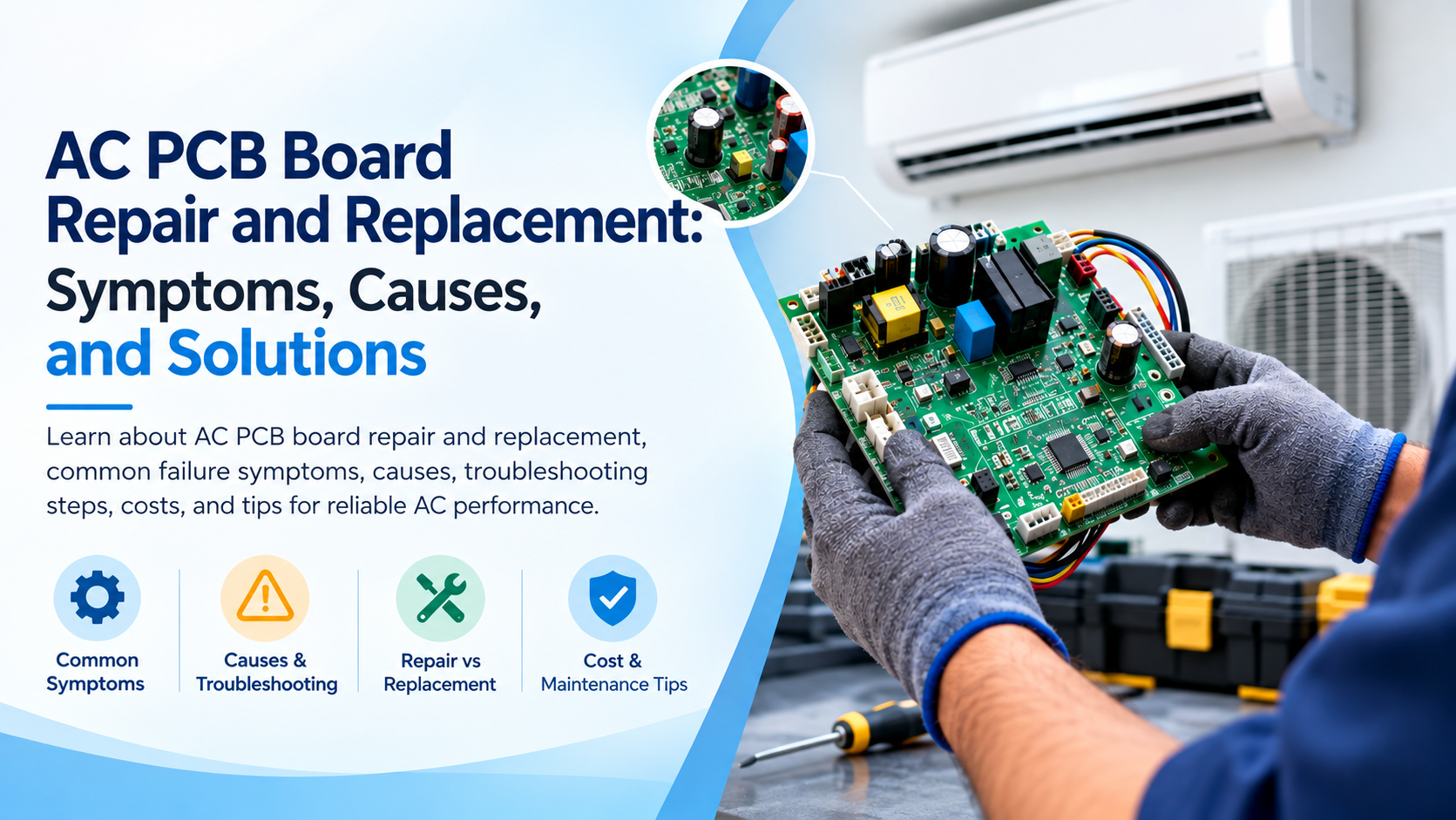
AC PCB Board Repair and Replacement: Symptoms, Causes, and Solutions
An air conditioner depends on several electrical and mechanical components to deliver efficient, consistent cooling. One of the most important electronic components is the Printed Circuit Board (PCB), which manages communication between different parts of the AC system and helps regulate its operation.
When the circuit board develops a fault, the air conditioner may stop working, provide insufficient cooling, display error codes, or turn on and off unexpectedly. In these situations, understanding AC PCB board repair and replacement can help you determine the next steps and avoid unnecessary component changes.
A faulty PCB does not always mean that the entire board must be replaced. Some problems can be resolved through component-level repairs, while extensive electronic damage may require a compatible replacement board.
In this guide, we explain the most common symptoms of PCB failure, what causes these problems, how technicians diagnose them, and when repair or replacement may be the better option.
What Is an AC PCB Board and How Does It Work?
An AC PCB board is an electronic circuit board that controls various functions of an air conditioning system. Depending on the model, it may manage compressor operation, fan motors, temperature sensors, operating modes, and communication between indoor and outdoor units.
Modern inverter air conditioners rely on sophisticated electronic controls to regulate compressor speed and maintain the desired temperature. The PCB processes information from sensors and sends signals to the relevant components to help the system operate correctly.
A typical air conditioning system may contain separate control boards for the indoor unit, outdoor unit, or inverter circuit. A problem in one board can affect overall performance, even when other components remain functional.
Because different AC models use different electronic configurations, identifying the correct board and diagnosing the actual fault are essential before attempting a repair.
7 Common Signs of a Faulty AC PCB Board
Recognizing the warning signs of a potential PCB problem can help you arrange timely inspection and prevent additional damage.
1. The Air Conditioner Does Not Turn On
If your AC does not respond when you press the power button, a faulty control board may be one possible cause. However, the problem could also result from a tripped circuit breaker, a power supply issue, damaged wiring, or a faulty control component.
A technician should first verify the incoming electrical supply and other basic connections before concluding that the PCB needs repair or replacement.
2. The AC Runs but Does Not Cool Properly
A damaged PCB may prevent the compressor from operating correctly or interfere with communication between the indoor and outdoor units. As a result, the air conditioner may run without producing sufficient cooling.
However, poor cooling can also be caused by dirty air filters, restricted airflow, refrigerant issues, or compressor problems. A complete diagnosis helps identify the real cause rather than replacing electronic components unnecessarily.
3. The AC Turns On and Off Repeatedly
Frequent restarting or unexpected shutdowns may indicate a control-board fault, sensor malfunction, electrical instability, or overheating.
The technician may need to check operating temperatures, power supply conditions, wiring, and stored error codes to determine why the system keeps stopping.
4. Error Codes Appear on the Display
Many modern air conditioners display error codes when the system detects an abnormal condition. Some codes relate to temperature sensors, communication failures, inverter circuits, or control-board problems.
An error code does not automatically confirm PCB failure. Always refer to the manufacturer’s documentation and use the code as a starting point for further testing.
5. The Indoor or Outdoor Fan Does Not Work
A faulty control board can interfere with fan operation, but a damaged fan motor, wiring problem, or another electrical component can produce similar symptoms.
Testing the relevant components helps establish whether the PCB is responsible for the problem.
6. The AC Responds Inconsistently to Settings
If the air conditioner ignores temperature settings, changes operating modes unexpectedly, or responds intermittently to commands, the cause may involve the control board, remote receiver, sensors, or communication wiring.
Recording when the symptoms occur can help a technician narrow down the possibilities.
7. There Are Signs of Electrical Damage
Burn marks, corrosion, damaged connectors, or a burning smell can indicate an electrical fault. Stop using the AC if you suspect electrical damage, provided you can safely switch it off, and arrange a professional inspection.
Do not touch exposed wiring or attempt to inspect an energized circuit board. Electrical components can retain dangerous voltages even after the system is switched off.
What Causes AC PCB Board Failure?
Several electrical, environmental, and component-related factors can contribute to PCB problems.
Electrical Surges and Voltage Fluctuations
Sudden voltage changes and electrical surges can damage sensitive electronic components. Repeated electrical stress may also contribute to premature failure.
Proper electrical installation, suitable grounding, and surge protection where recommended by the manufacturer can help reduce these risks.
Moisture and Water Leakage
Moisture entering the electrical compartment can cause corrosion, short circuits, and damaged connections. Drainage issues, water leakage, and unsuitable installation conditions should be investigated when moisture-related damage is suspected.
Dust and Environmental Contamination
Dust and contaminants can accumulate around electrical components and connectors. In some conditions, this buildup may contribute to overheating or connection problems.
Regular maintenance and keeping the equipment within the manufacturer’s recommended operating conditions can help reduce preventable issues.
Loose Connections and Damaged Wiring
Loose connectors, deteriorated insulation, and damaged cables may interrupt the signals or power supplied to the PCB. These faults can produce symptoms similar to a defective circuit board.
Technicians should inspect connections and wiring before recommending an expensive replacement.
Age and Component Deterioration
Electronic components can deteriorate over time because of heat, electrical stress, and normal aging. Older equipment may also require components that are difficult to source.
The availability of compatible parts and the overall condition of the air conditioner should be considered when choosing between repair and replacement.
For more information about warning signs, read our existing guide: AC PCB Board Not Working: 10 Common Problems, Causes, and Solutions.
AC PCB Board Repair vs. Replacement: Which Option Is Better?
The right choice depends on the type of damage, the availability of compatible components, the cost of the work, and the expected reliability after repair.
When AC PCB Board Repair May Be Suitable
PCB repair may be possible when the fault is limited to an identifiable component, damaged connection, or another repairable issue and the board remains in suitable condition.
Repair may be worth considering when:
-
The damaged component can be replaced safely.
-
The circuit board does not have extensive corrosion or burnt traces.
-
Suitable replacement components are available.
-
The repair can be tested according to the manufacturer’s requirements.
-
The total repair cost is reasonable compared with replacement.
A qualified technician should determine whether the repair is technically appropriate. Not every board can be repaired reliably, particularly when damage affects critical circuitry.
When AC PCB Board Replacement Is Necessary
Replacement may be the better choice when the board has extensive damage, essential electronic components have failed, or a dependable repair is not practical.
Replacement may be recommended when:
-
Multiple components have sustained serious damage.
-
The circuit board has extensive corrosion or burnt tracks.
-
Required components are unavailable.
-
Previous repairs have not resolved the fault.
-
The cost of a reliable repair approaches the cost of replacement.
The replacement board must match the air conditioner’s model and technical specifications. Using an incompatible PCB can cause operating problems or damage other components.
How Should You Make the Final Decision?
Ask the technician to explain the identified fault, the recommended solution, and the total estimated cost. Compare the repair or replacement expense with the AC’s age, condition, and expected remaining service life.
A lower initial cost is not always the best long-term choice. The goal should be a safe, compatible, and dependable solution.
How Do Technicians Diagnose an AC PCB Problem?
Accurate diagnosis is important because several AC faults can produce similar symptoms.
A professional inspection may include the following steps:
-
Checking the power supply: Verifying that the unit receives the correct electrical supply and checking relevant protective devices.
-
Inspecting wiring and connectors: Looking for loose connections, damaged cables, corrosion, or signs of overheating.
-
Reviewing error codes: Checking the manufacturer’s diagnostic information for the specific AC model.
-
Testing related components: Evaluating sensors, fan motors, and other relevant components that may cause similar symptoms.
-
Inspecting the control board: Examining the board for visible damage and carrying out appropriate electrical tests.
-
Confirming the repair: Testing the system after the work to verify correct operation and check for recurring faults.
The exact procedure depends on the air conditioner model and the nature of the problem. Inverter circuits and other high-voltage components should only be handled by qualified personnel using appropriate safety procedures.
How Much Does AC PCB Board Repair or Replacement Cost?
The cost of AC PCB board repair and replacement varies depending on several factors. These include the air conditioner brand, model, board type, severity of the fault, component availability, and labor charges.
A limited component-level repair may cost less than replacing the complete circuit board. However, extensive damage or unavailable components may make replacement more practical.
Before approving the work, ask for an estimate covering:
-
Diagnostic and inspection charges
-
Repair labor or replacement-board cost
-
Compatibility and availability of the required parts
-
Testing after repair or installation
-
Warranty terms for the work and components
For older air conditioners, compare the total cost of repair with the overall condition of the system. A professional assessment can help you decide whether restoring the existing unit is a sensible investment.
How Can You Prevent AC PCB Board Problems?
Although electronic failures cannot always be prevented, appropriate maintenance can reduce avoidable electrical and environmental problems.
Schedule Regular AC Maintenance
Periodic inspections help identify deteriorating wiring, unusual operating conditions, drainage problems, and other issues before they become more serious.
Maintain Proper Airflow
Clean air filters and unobstructed airflow help the system operate under the conditions intended by the manufacturer. Restricted airflow can contribute to other AC problems and should be addressed promptly.
Protect the Electrical Supply
Ensure that electrical installation, grounding, and protective devices meet applicable requirements. Discuss suitable surge protection with a qualified electrician or AC technician when electrical instability is a concern.
Address Water Leakage Promptly
Check for drainage problems and visible water leakage around the unit. Moisture should not be allowed to accumulate near electrical compartments.
Respond to Warning Signs Early
Repeated shutdowns, unusual error codes, inconsistent cooling, and electrical smells should not be ignored. Early diagnosis can help identify the problem before additional components are affected.
For additional troubleshooting information, visit our related article on common AC PCB board problems and their solutions.
Frequently Asked Questions About AC PCB Board Repair
Can an AC PCB board be repaired instead of replaced?
Yes. Some faults can be repaired when the damaged components are identifiable, suitable parts are available, and the board remains in good condition. Extensive damage may require replacement.
Will a faulty PCB stop an air conditioner from cooling?
Yes. A PCB problem can affect compressor operation, fan control, or communication between indoor and outdoor units. However, poor cooling can also have mechanical or refrigerant-related causes.
Is it safe to repair an AC PCB board at home?
Component-level PCB repair is not recommended for untrained users because AC systems contain hazardous electrical components. Basic external checks should be limited to actions permitted by the manufacturer’s instructions.
How long does AC PCB board repair take?
The time depends on the fault, the availability of replacement components, and the complexity of testing. A straightforward repair may be completed sooner than a repair that requires special parts or extensive diagnosis.
Should I replace the PCB if my AC displays an error code?
Not necessarily. Error codes identify abnormal operating conditions, and the underlying cause may involve wiring, sensors, communication, or other components. Follow the manufacturer’s diagnostic procedure before replacing the board.
Can voltage fluctuations damage an AC control board?
Yes. Electrical surges and unsuitable voltage conditions can damage sensitive electronic components. Correct electrical installation and suitable protective measures can help reduce the risk.
Conclusion
AC PCB board repair and replacement should begin with an accurate diagnosis rather than assumptions based on symptoms alone. Power supply problems, damaged wiring, moisture, component deterioration, and control-board faults can all affect air conditioner performance.
Repair may be suitable for limited, identifiable faults, while extensive damage may make replacement the more reliable option. Checking compatibility, comparing the total cost, and testing the system after the work are important parts of making the right decision.
If your air conditioner is not cooling properly, repeatedly shutting down, or displaying unexplained error codes, arrange a professional inspection to identify the cause and determine the most appropriate solution.
Explore more troubleshooting information in our guide to 10 common AC PCB board problems, causes, and solutions. Regular maintenance and timely diagnosis can help support reliable air conditioner operation and reduce the risk of avoidable component damage.